
Running a successful business requires more than a great idea. It demands strong leadership, efficient operations, clear strategy, and the ability to adapt to constant change. Many organizations reach a point where internal teams need outside expertise to move forward with clarity and confidence. This is where a Business Management Consultant plays a vital role.
This comprehensive guide explains what a business management consultant does, why businesses hire them, the skills they bring, and how organizations of all sizes benefit from their expertise. Whether you are a startup founder, a small business owner, or an executive at a growing enterprise, understanding this role can help you make better strategic decisions.
What Is a Business Management Consultant?
A Business Management Consultant is a professional advisor who helps organizations improve performance, solve operational challenges, and achieve long term goals. They work closely with leadership teams to analyze current processes, identify inefficiencies, and recommend practical solutions that align with business objectives.
Unlike specialists who focus on a single department, business management consultants take a holistic view. They examine strategy, operations, finance, workforce structure, and leadership practices to ensure every part of the organization supports sustainable growth.
Core Responsibilities of a Business Management Consultant
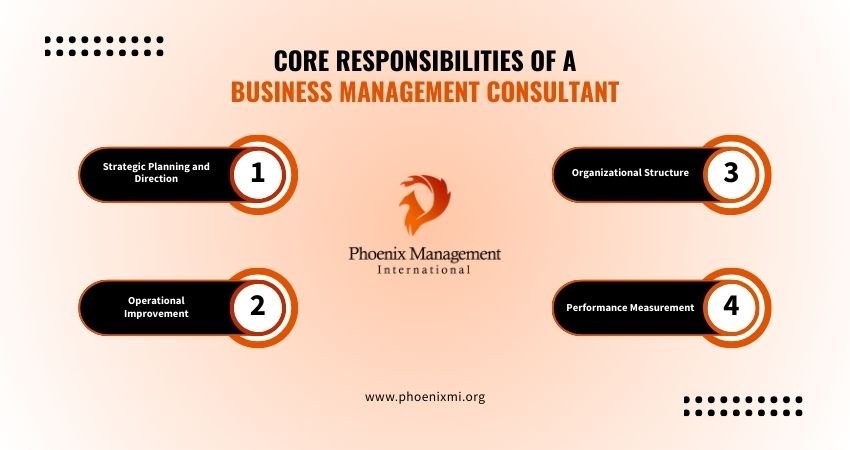
Strategic Planning and Direction
One of the primary responsibilities of a business management consultant is helping organizations define clear goals and build actionable strategies. This includes evaluating market opportunities, assessing competition, and creating realistic roadmaps for growth.
Consultants help leaders move from vision to execution by turning ideas into structured plans that can be measured and refined over time.
Operational Improvement
Many businesses struggle with inefficiencies that drain time and resources. Consultants analyze workflows, systems, and internal communication to identify bottlenecks and areas of waste. This often includes business process management consulting, where processes are redesigned to improve productivity, reduce costs, and increase consistency across teams.
Organizational Structure and Leadership Support
A consultant evaluates whether roles, reporting lines, and leadership responsibilities are aligned with business goals. They may recommend changes to improve accountability, decision making, and team collaboration.
In growing companies, this guidance is critical to avoid confusion and burnout as operations scale.
Performance Measurement and Optimization
Consultants help organizations establish key performance indicators and tracking systems. These metrics allow leaders to make informed decisions based on data rather than assumptions. Regular performance reviews ensure strategies remain effective as the business evolves.
Types of Businesses That Hire Business Management Consultants
Small and Growing Businesses
Small business management consulting is especially valuable for companies that lack in house expertise or formal management systems. Entrepreneurs often excel at their craft but need guidance on operations, finance, and growth strategy.
A consultant helps small businesses build strong foundations, avoid costly mistakes, and grow in a controlled and sustainable way.
Mid Sized Companies
As companies expand, complexity increases. Processes that once worked may become inefficient. Consultants help standardize operations, improve communication across departments, and prepare leadership for the next stage of growth.
Large Enterprises
Established organizations often hire consultants during periods of transformation, such as mergers, digital adoption, or market expansion. A fresh external perspective helps uncover blind spots and challenge outdated practices.
Key Skills of an Effective Business Management Consultant
Analytical Thinking
A successful Business Management Consultant must be able to assess complex situations quickly. They gather data, evaluate patterns, and identify root causes of problems rather than focusing only on surface level symptoms.
Communication and Collaboration
Consultants work with executives, managers, and frontline teams. Clear communication is essential to gain trust, explain recommendations, and ensure alignment across the organization.
Industry Knowledge and Adaptability
While consultants may specialize in certain industries, strong adaptability allows them to apply proven frameworks across different business models. Understanding market trends and customer behavior adds depth to their recommendations.
Problem Solving and Practical Execution
Effective consultants do more than provide reports. They offer realistic solutions that teams can actually implement. This balance between strategy and execution defines high quality business and management consultancy work.
How Business Management Consultants Add Value
Objective Perspective
Internal teams can become too close to problems to see them clearly. A consultant brings an unbiased viewpoint that helps leaders make rational decisions without emotional attachment.
Faster Decision Making
With experience across multiple organizations, consultants recognize patterns and proven approaches. This shortens the learning curve and helps businesses act quickly with confidence.
Risk Reduction
From financial planning to operational changes, consultants help evaluate risks before major decisions are made. This reduces costly errors and improves long term stability.
Customized Solutions
Every organization is different. A skilled consultant avoids one size fits all approaches and instead tailors recommendations based on company culture, goals, and resources.
Business Management Consulting Services Explained
Business management consulting services typically include strategy development, operational audits, leadership coaching, financial planning support, and performance optimization. These services may be offered as short term projects or long term advisory relationships, depending on business needs.
Some consultants also assist with creating a management consulting business plan for organizations launching new initiatives, entering new markets, or restructuring operations.
When Should You Hire a Business Management Consultant?
You may benefit from hiring a Business Management Consultant if your organization is experiencing:
- Stagnant growth despite strong demand
- Operational inefficiencies or rising costs
- Leadership challenges or unclear accountability
- Difficulty scaling systems and teams
- Major changes such as expansion or restructuring
Early engagement often leads to better outcomes than waiting until challenges become critical.
How to Choose the Right Business Management Consultant
Assess Experience and Track Record
Look for consultants with experience relevant to your industry and business size. Case studies and client testimonials provide insight into their approach and results.
Evaluate Their Approach
A strong consultant listens carefully before offering solutions. They should ask thoughtful questions and demonstrate a clear understanding of your goals.
Focus on Collaboration
The best consultants work as partners, not outsiders. They involve your team in the process and build internal capabilities rather than creating dependency.
The Future of Business Management Consulting
The consulting landscape continues to evolve as businesses adopt new technologies and flexible work models. However, the core value of a Business Management Consultant remains the same: helping organizations make smarter decisions, improve performance, and achieve sustainable success.
As markets become more competitive, companies that invest in expert guidance are better positioned to adapt, innovate, and lead.
Final Thoughts
A Business Management Consultant plays a crucial role in helping organizations navigate complexity, optimize operations, and plan for the future. From startups to established enterprises, businesses across industries rely on consulting expertise to overcome challenges and unlock growth opportunities.
By understanding what consultants do and how they add value, business leaders can make informed decisions about when and how to seek professional support. In an environment where clarity and efficiency matter more than ever, the right consultant can become a powerful catalyst for long term success.