
Choosing the right business management consultant is a strategic decision. The right advisor can improve operations, strengthen financial performance, and accelerate growth. The wrong one can delay progress and waste resources.
This guide outlines a clear, practical framework to help decision-makers select a consultant who delivers measurable business results.
Understanding the Role of a Business Management Consultant
A business management consultant acts as an external advisor who helps organizations:
- Diagnose operational inefficiencies
- Improve financial and performance management
- Strengthen strategic planning
- Support change and growth initiatives
- Implement structured improvements
Unlike internal teams, consultants provide an objective perspective. They analyze data, identify gaps, and design actionable strategies aligned with business goals.
Their value lies not only in planning but also in ensuring implementation leads to tangible outcomes.
Step-by-Step Guide to Choosing the Right Consultant
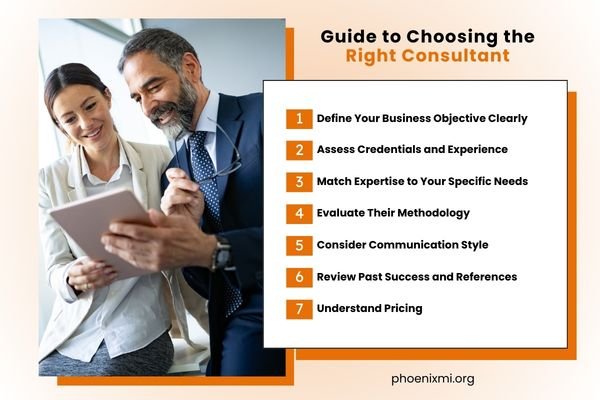
1. Define Your Business Objective Clearly
Before evaluating consultants, clarify:
- What specific problem are we solving?
- What measurable result do we expect?
- What is the timeline?
Example:
| Challenge | Target Outcome |
|---|---|
| Revenue stagnation | 15% growth in 12 months |
| High costs | 10% reduction in expenses |
| Operational delays | 30% faster project cycles |
Clear objectives make it easier to assess consultant suitability.
2. Assess Credentials and Experience
Credentials matter — but relevance matters more.
When reviewing potential consultants, examine:
- Educational background
- Industry experience
- Case studies
- Past client results
- Years of consulting practice
A consultant’s experience should directly relate to your business challenge. Track record is more important than titles.
3. Match Expertise to Your Specific Needs
Not all consultants specialize in the same areas. Some focus on:
- Strategy and growth
- Financial restructuring
- Operational efficiency
- Organizational change
- Digital transformation
Ensure the consultant’s expertise aligns with your primary objective.
Ask:
- Have you solved similar problems before?
- What measurable results did you achieve?
- Can you provide relevant examples?
Alignment between your needs and their expertise increases the probability of success.
4. Evaluate Their Methodology
Strong consultants follow structured processes.
They should clearly explain:
- How they assess your business
- What data they collect
- How they identify root causes
- How solutions are designed
- How implementation is managed
- How performance is measured
If their approach is vague, outcomes may also be unclear.
5. Consider Communication Style and Cultural Fit
Consultants work closely with leadership and teams. Their communication style matters.
Evaluate whether they:
- Communicate clearly and confidently
- Listen actively
- Adapt to your company culture
- Encourage collaboration
- Challenge ideas constructively
A consultant who cannot build internal alignment will struggle to implement change effectively.
6. Review Past Success and References
Due diligence reduces risk.
Request:
- Client testimonials
- Performance metrics from past engagements
- References you can contact
Ask previous clients:
- Were goals achieved?
- Was the consultant easy to work with?
- Would you hire them again?
Reputation is built on results, not marketing claims.
7. Understand Pricing and ROI Expectations
Consulting fees typically follow one of these models:
- Fixed project fee
- Monthly retainer
- Hourly rate
- Performance-based compensation
Rather than focusing only on cost, evaluate expected return.
Define KPIs in advance and link consultant performance to measurable outcomes.
Red Flags to Avoid
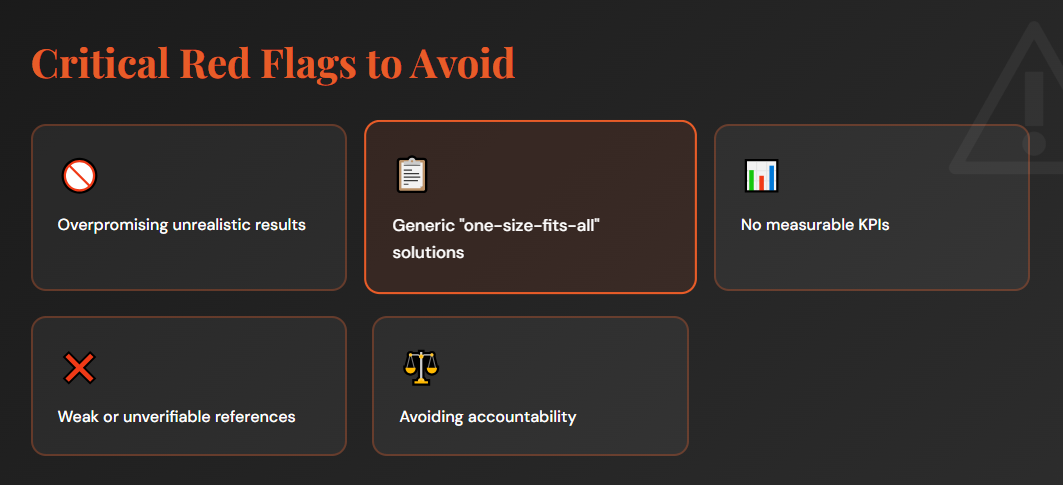
- Overpromising unrealistic results
- Generic “one-size-fits-all” solutions
- No measurable KPIs
- Weak or unverifiable references
- Avoiding accountability
Professional consultants define success clearly and commit to measurable impact.
Quick Evaluation Checklist
Score each candidate from 1–5:
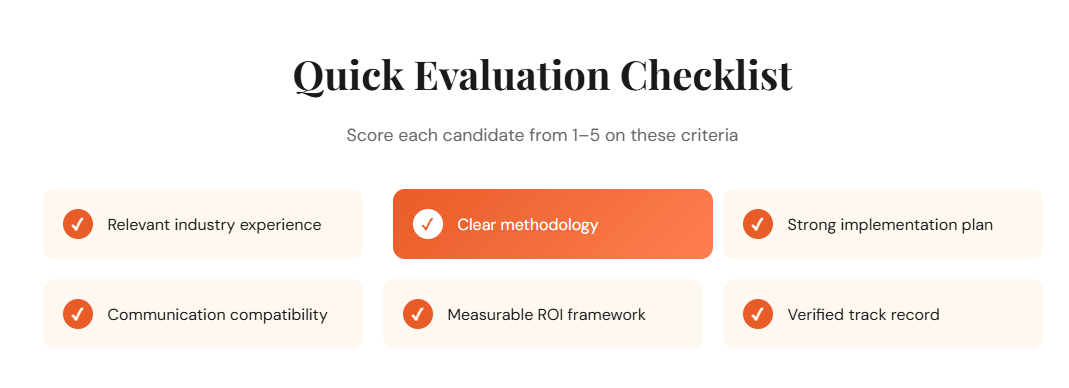
- Relevant industry experience
- Clear methodology
- Strong implementation plan
- Communication compatibility
- Measurable ROI framework
- Verified track record
Use objective criteria to avoid emotional decision-making.
Frequently Asked Questions
1. What does a business management consultant do?
They analyze organizational challenges and implement strategic, operational, or financial improvements to enhance performance and growth.
2. How do I know if I need a business consultant?
If your business faces stagnation, operational inefficiencies, rapid growth challenges, restructuring, or lack of internal expertise, a consultant may add value.
3. How much does a business management consultant cost?
Costs vary based on scope and experience, ranging from smaller fixed-fee engagements to larger transformation projects.
4. How long does a consulting engagement last?
Most projects last between 3–6 months, though larger initiatives may take longer.
5. How can I measure consulting ROI?
Set clear KPIs before engagement, such as revenue growth, cost savings, efficiency gains, or productivity improvements, and compare performance against baseline metrics.
Summary
To choose the right business management consultant:
- Define your objective clearly
- Evaluate relevant experience and credentials
- Match expertise to your specific needs
- Review methodology and implementation plan
- Assess communication and cultural fit
- Tie investment to measurable outcomes
A strong consultant does more than provide advice they deliver structured solutions that produce measurable business impact.
Ready to Move Your Business Forward?
Choosing the right consultant is about more than advice, it’s about measurable results, operational clarity, and sustainable growth.
If your organization is facing performance challenges, planning expansion, or navigating strategic change, working with an experienced partner can make the difference between stalled progress and accelerated success.
Phoenix Management International is a business management consultant based in San Antonio, helping companies improve operations, strengthen financial performance, and execute growth strategies with confidence.
If you’re ready to take a structured, results-driven approach to improving your business, consider scheduling a consultation to discuss your goals and explore practical next steps tailored to your organization.