
Cash flow is often described as the lifeblood of a business and for good reason. A company can have impressive sales, strong customer demand, and healthy profit margins, yet still struggle to pay employees, suppliers, or operating expenses if cash isn’t available when it’s needed. This is why cash flow management is one of the most important aspects of running a successful business.
Whether you’re a startup founder, small business owner, or managing an established company, understanding how money moves through your business helps you make smarter financial decisions, reduce risk, and create long-term stability.
In this guide, you’ll learn why cash flow management matters, how it impacts business growth, common mistakes to avoid, and practical strategies to strengthen your company’s financial health.
What Is Cash Flow Management?
Cash flow management is the process of monitoring, analyzing, and optimizing the movement of money into and out of a business. It involves ensuring enough cash is available to cover day-to-day expenses while planning for future investments and unexpected costs.
Simply put:
- Cash inflow includes customer payments, loans, investments, and other income.
- Cash outflow includes payroll, rent, inventory, taxes, utilities, loan payments, and operating expenses.
Effective cash flow management ensures your business always has enough working capital to operate smoothly without unnecessary financial stress.
Quick Definition: Cash flow management is the strategic process of tracking, forecasting, and controlling incoming and outgoing cash to maintain financial stability and support business growth.
Why Cash Flow Management Is Important for Business Success
Businesses don’t usually fail because they aren’t profitable—they often fail because they run out of cash.
Healthy cash flow provides the flexibility needed to manage operations, respond to market changes, and invest in future opportunities. Without it, even a profitable business can face delayed payments, strained supplier relationships, or missed growth opportunities.
Some of the biggest reasons cash flow management is essential include:
- Keeps daily operations running smoothly
- Ensures employees and vendors are paid on time
- Prevents unnecessary borrowing
- Supports strategic business planning
- Improves financial resilience
- Builds confidence with investors and lenders
The Difference Between Cash Flow and Profit
Many business owners mistakenly believe profit and cash flow mean the same thing.
| Profit | Cash Flow |
|---|---|
| Revenue minus expenses | Actual cash moving in and out of the business |
| Appears on the income statement | Appears on the cash flow statement |
| Can look positive even if customers haven’t paid | Reflects available cash today |
| Measures profitability | Measures liquidity |
Example
Imagine a company sells $150,000 worth of products on 90-day payment terms.
On paper:
- Revenue looks excellent.
- Profit appears healthy.
However, if payroll, rent, and supplier invoices are due before customer payments arrive, the business may experience a cash shortage despite being profitable.
This illustrates why monitoring cash flow is just as important as tracking profit.
Key Benefits of Effective Cash Flow Management
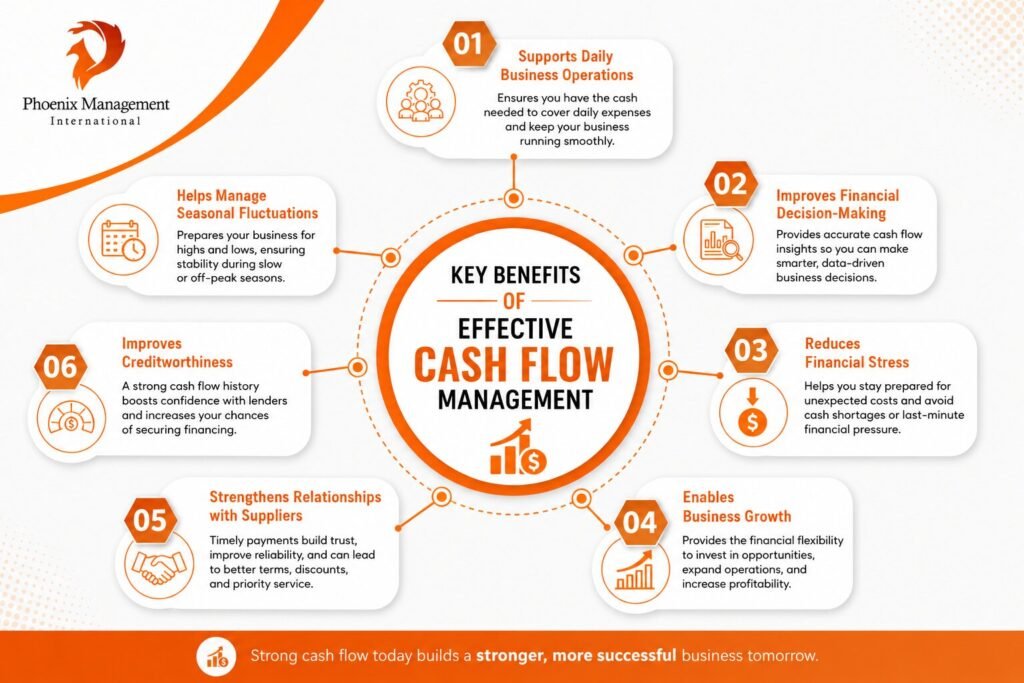
1. Supports Daily Business Operations
Every business has recurring expenses.
These include:
- Employee salaries
- Inventory purchases
- Utilities
- Rent
- Insurance
- Taxes
- Marketing costs
Consistent cash flow ensures these obligations are met without disruption.
2. Improves Financial Decision-Making
When business owners understand their cash position, they can confidently decide when to:
- Hire employees
- Expand operations
- Purchase equipment
- Launch new products
- Invest in technology
Instead of relying on guesswork, decisions are backed by financial data.
3. Reduces Financial Stress
Unexpected expenses happen.
Equipment breaks.
Customers pay late.
Economic conditions change.
Businesses with strong cash reserves and effective cash flow management are better prepared to absorb these challenges without panic.
4. Enables Business Growth
Growth requires investment.
Whether opening a second location, expanding inventory, or entering new markets, healthy cash flow provides the resources needed to grow sustainably.
Without sufficient liquidity, businesses often delay opportunities that could increase long-term revenue.
5. Strengthens Relationships with Suppliers
Suppliers value reliable customers.
Paying invoices on time can result in:
- Better pricing
- Higher credit limits
- Faster delivery
- Preferred customer status
Strong supplier relationships contribute to smoother operations and improved profitability.
6. Improves Creditworthiness
Banks and investors evaluate more than revenue.
They want evidence that a business consistently generates enough cash to meet financial obligations.
Healthy cash flow improves the likelihood of securing:
- Business loans
- Lines of credit
- Investment funding
- Favorable financing terms
7. Helps Manage Seasonal Fluctuations
Many industries experience seasonal highs and lows.
Examples include:
- Retail during holidays
- Construction during warmer months
- Tourism businesses
- Landscaping companies
Cash flow planning allows businesses to prepare for slower periods while maintaining operations year-round.
Common Business Management Mistakes That Hurt Cash Flow
Poor cash flow is often caused by avoidable management decisions rather than declining sales.
Some of the most common Business Management Mistakes include:
Sending Invoices Late
Delayed invoicing leads to delayed payments, reducing available cash.
Poor Inventory Management
Overstocking ties up cash that could be used elsewhere.
Ignoring Cash Flow Forecasts
Without forecasting, businesses often discover cash shortages too late.
Overspending During High-Revenue Months
Temporary sales increases don’t always translate into long-term financial stability.
Relying Too Heavily on Credit
Debt can help growth, but excessive borrowing increases financial risk and reduces cash flexibility.
The Business Management Process and Cash Flow
A strong Business Management Process integrates financial planning into everyday operations rather than treating it as an isolated accounting task.
A structured process typically includes:
- Budget planning
- Revenue forecasting
- Expense monitoring
- Cash flow forecasting
- Performance analysis
- Risk management
- Continuous financial improvement
Businesses that consistently follow these steps are better positioned to adapt to changing market conditions and maintain long-term profitability.
Practical Strategies to Improve Cash Flow
Accelerate Customer Payments
Encourage faster payments by:
- Offering early payment discounts
- Using electronic invoicing
- Accepting multiple payment methods
- Following up promptly on overdue invoices
Control Operating Expenses
Review recurring expenses regularly.
Ask:
- Are subscriptions still necessary?
- Can vendor contracts be renegotiated?
- Are operational processes efficient?
Small savings often compound into significant improvements.
Forecast Cash Flow Monthly
Cash flow forecasting helps identify upcoming shortages before they become emergencies.
Forecasts should include:
- Expected sales
- Accounts receivable
- Payroll
- Taxes
- Loan payments
- Planned investments
Maintain an Emergency Cash Reserve
A financial cushion protects against:
- Unexpected repairs
- Economic downturns
- Supply chain disruptions
- Emergency business expenses
Monitor Financial Reports
Review key financial reports regularly, including:
- Cash flow statement
- Income statement
- Balance sheet
- Accounts receivable aging report
Consistent monitoring allows problems to be addressed early.
Signs Your Business May Have Cash Flow Problems
Watch for these warning signs:
- Frequent late payments to suppliers
- Difficulty meeting payroll
- Increasing reliance on short-term loans
- Declining cash reserves
- Rising accounts receivable
- Missed growth opportunities due to limited cash
Recognizing these issues early makes corrective action more effective.
Business Management Benefits Beyond Cash Flow
Strong financial management creates value beyond simply maintaining positive cash flow.
Some of the broader Business Management Benefits include:
- Better operational efficiency
- Improved financial visibility
- Reduced business risk
- Smarter investment decisions
- Stronger leadership confidence
- Increased profitability
- Sustainable long-term growth
- Greater resilience during economic uncertainty
When financial management becomes part of daily decision-making, businesses are better equipped to navigate challenges and capitalize on new opportunities.
Cash Flow Management Checklist
Use this checklist to evaluate your business:
✔ Monitor cash flow weekly
✔ Forecast future cash needs
✔ Invoice customers promptly
✔ Track overdue payments
✔ Control unnecessary expenses
✔ Maintain emergency reserves
✔ Review financial statements monthly
✔ Plan for seasonal fluctuations
✔ Monitor inventory levels
✔ Seek professional financial guidance when needed
Why Professional Business Management Matters
As businesses grow, financial management becomes increasingly complex.
Professional business management services can help organizations:
- Develop financial strategies
- Improve operational efficiency
- Strengthen budgeting processes
- Optimize cash flow
- Identify cost-saving opportunities
- Support sustainable business growth
- Improve overall financial performance
Expert guidance provides objective insights that business owners often overlook while managing day-to-day operations.
For businesses seeking Business Management in san antino, experienced advisors can help implement proven financial systems, improve cash flow visibility, and support long-term operational success.
Key Takeaways
- Cash flow management ensures businesses have enough cash to meet financial obligations.
- Positive cash flow supports growth, stability, and informed decision-making.
- Profitability alone does not guarantee financial health.
- Forecasting, budgeting, and expense control reduce financial risk.
- Avoiding common business management mistakes can significantly improve liquidity.
- Integrating cash flow planning into the business management process strengthens long-term success.
FAQs
Why is cash flow management more important than profit?
Profit measures overall earnings, while cash flow measures the actual money available to pay bills and operate the business. A profitable company can still experience financial difficulties if cash isn’t available when needed.
How often should businesses review cash flow?
Most businesses should monitor cash flow weekly and prepare monthly forecasts. Companies with rapid growth or seasonal fluctuations may benefit from more frequent reviews.
What causes poor cash flow?
Common causes include late customer payments, excessive operating expenses, poor inventory management, inadequate forecasting, and relying too heavily on debt.
How can small businesses improve cash flow?
Small businesses can improve cash flow by invoicing promptly, reducing unnecessary expenses, forecasting future cash needs, maintaining cash reserves, and closely monitoring financial reports.
What are the benefits of cash flow forecasting?
Cash flow forecasting helps businesses anticipate shortages, make informed financial decisions, manage seasonal fluctuations, reduce borrowing needs, and plan for future investments.
Conclusion
Cash flow management is more than an accounting function; it’s a strategic discipline that influences every aspect of business performance. Businesses that actively monitor, forecast, and optimize their cash flow are better positioned to handle uncertainty, seize growth opportunities, and build long-term financial resilience.
By making cash flow management a core part of your business strategy, you can improve operational stability, make more confident decisions, and create a stronger foundation for sustainable success.
Ready to Strengthen Your Business Operations?
Effective financial planning starts with expert guidance. Phoenix Management International provides professional business management services in San Antonio, TX, helping organizations improve cash flow, streamline operations, strengthen financial decision-making, and build sustainable growth strategies. Whether you’re looking to optimize day-to-day performance or plan for long-term success, experienced business management support can help your business move forward with confidence.